The 5 compound exercises every midlife woman should master
If your idea of exercise still revolves around pounding the pavement, sweating through HIIT classes or spending 45 minutes on the cross trainer, it may be time to rethink your routine.
While cardiovascular exercise is fantastic for heart health, mood and endurance, strength training is an important part of fitness for women in midlife. Yet it remains one of the most overlooked forms of training. From our 30s onwards, we gradually begin to lose muscle mass and strength as part of the normal ageing process. During perimenopause and menopause, hormonal changes can also contribute to changes in muscle mass, strength and bone health.
The result? Maintaining muscle and strength becomes increasingly important for physical function, balance and everyday activities such as carrying shopping or climbing the stairs.
The good news is that resistance training can help us build and preserve muscle strength while placing healthy stress on our bones. Regular strength training stimulates muscle protein synthesis, helping us maintain and build lean muscle. Weight-bearing and resistance exercise can also support bone health, while strength training can improve physical function, balance and insulin sensitivity.
Current NHS and World Health Organization guidelines recommend adults perform muscle-strengthening activities involving all major muscle groups at least twice a week, alongside at least 150 minutes of moderate-intensity aerobic activity, or 75 minutes of vigorous activity. The key isn't spending hours lifting huge weights. It's choosing effective exercises that work multiple muscles at once and gradually increasing the challenge over time.
These are known as compound exercises because they recruit several muscle groups in one movement, giving you far more bang for your buck. Here are the five most useful moves to add to your routine.
1. Goblet squat
Why it's underrated: Squats mimic one of the most important movements we perform every day, sitting down and standing up. They strengthen the quads, glutes, hamstrings and core while also challenging hip, knee and ankle mobility, stability and balance.
How to do it: Stand with your feet shoulder-width apart, holding a dumbbell or kettlebell vertically against your chest with both hands. Brace your core and keep your chest lifted. Push your hips backwards before bending your knees to lower yourself until your thighs are roughly parallel with the floor, or as low as feels comfortable. Drive through your heels to return to standing, squeezing your glutes at the top. Avoid letting your knees cave in or your heels lift from the floor.
Recommended weight: Beginners: 2-8kg. Intermediate: 8-16kg. Choose a weight that makes the final few reps challenging while allowing you to maintain good form.
Sets and reps: 3 sets of 8-12 reps.
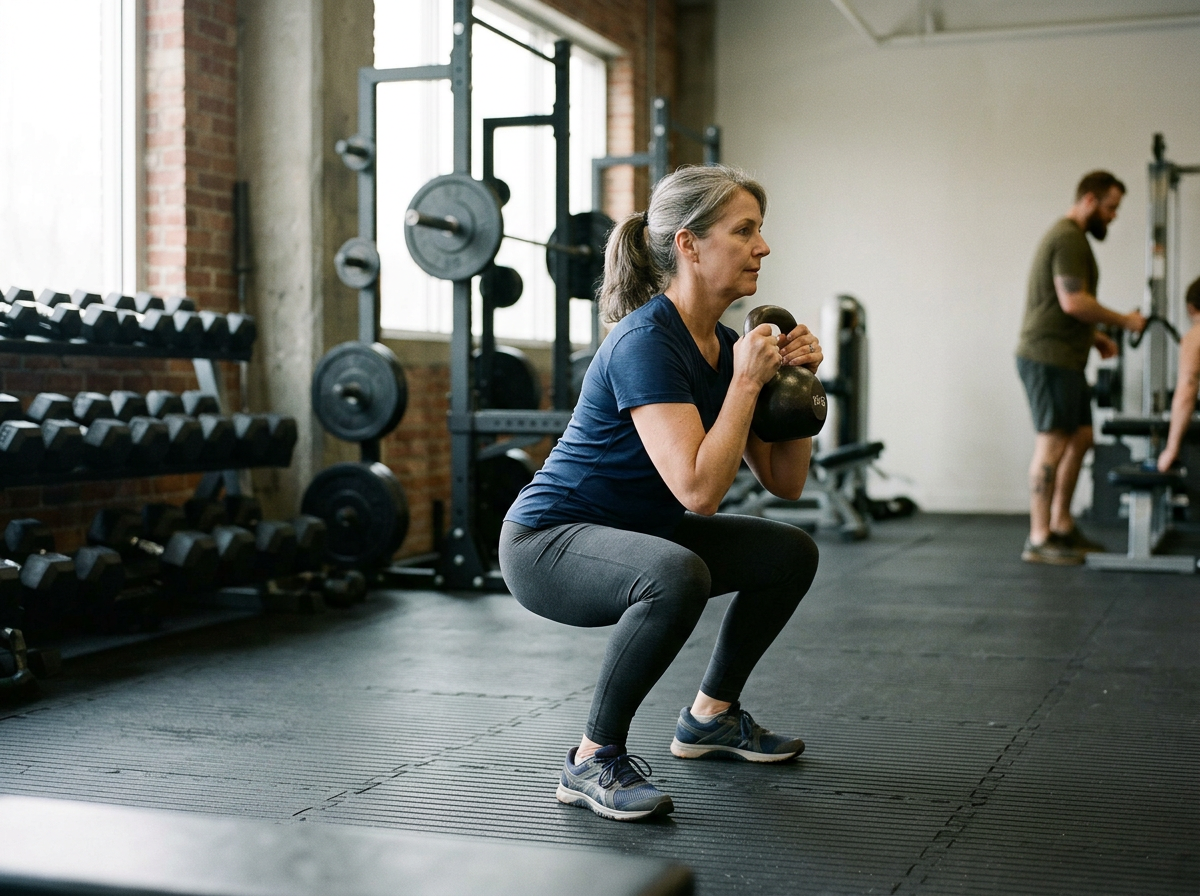
AI generated image of woman performing a goblet squat
2. Romanian deadlift
Why it's underrated: Deadlifts often sound intimidating, but this variation is one of the best exercises for strengthening the posterior chain, including the glutes and hamstrings. These muscles are important for posture, hip strength and everyday lifting tasks.
How to do it: Hold a dumbbell in each hand in front of your thighs with a slight bend in your knees. Keeping your back flat and shoulders relaxed, hinge at the hips by pushing your bottom behind you, allowing the weights to travel close to your legs. Lower until you feel a stretch in your hamstrings, then drive your hips forwards to return to standing, squeezing your glutes at the top.
Recommended weight: Beginners: 2-8kg in each hand. Intermediate: 8-15kg.
Sets and reps: 3 sets of 8-10 reps.
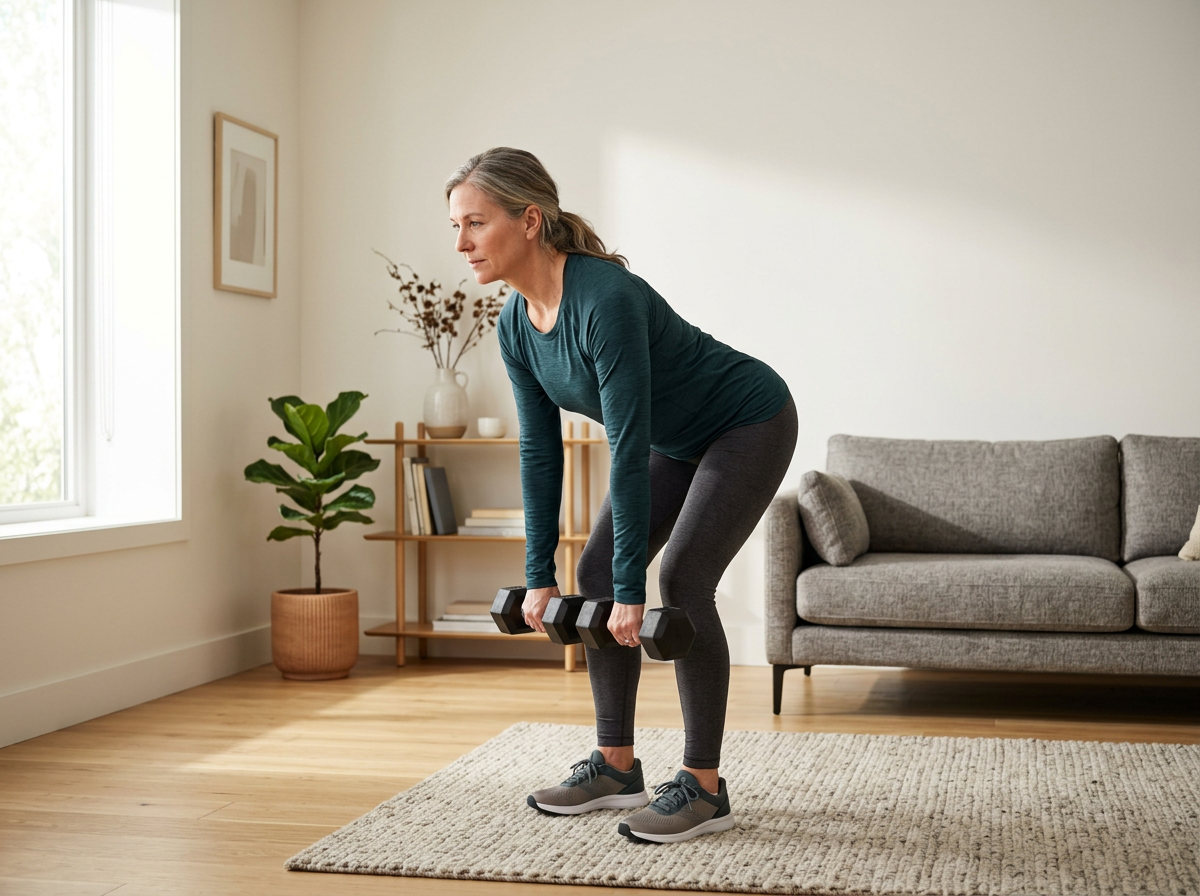
AI generated image of woman performing a romanian deadlift
3. Bent-over row
Why it's underrated: Hours spent sitting at desks or looking down at our phones can leave us feeling rounded through the shoulders. Rows strengthen the upper back and support shoulder strength and function.
How to do it: Hold a dumbbell in each hand and hinge forwards until your torso is around 45 degrees to the floor, keeping your spine neutral. Let your arms hang beneath your shoulders before pulling your elbows back towards your hips, squeezing your shoulder blades together. Pause briefly before lowering the weights under control.
Recommended weight: Beginners: 2-6kg in each hand. Intermediate: 6-12kg.
Sets and reps: 3 sets of 10-12 reps.
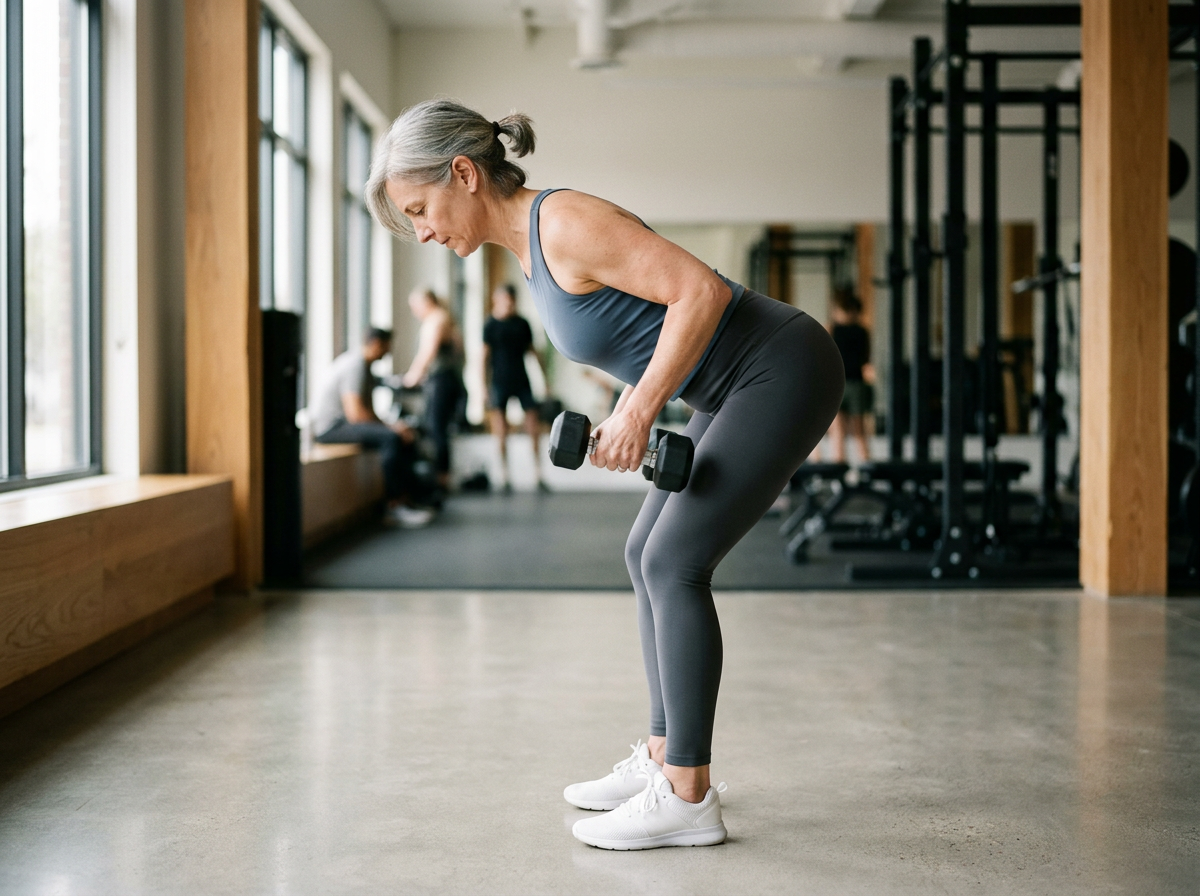
AI generated image of woman performing a bent-over row
4. Dumbbell shoulder press
Why it's underrated: Strong shoulders make everyday tasks easier, from lifting shopping bags to putting luggage in an overhead locker. They also help maintain upper body strength and physical independence as we age.
How to do it: Sit or stand holding a dumbbell in each hand at shoulder height with your palms facing forwards. Brace your core and avoid arching your back. Press the weights overhead until your arms are almost straight, then lower slowly back to the starting position with control.
Recommended weight: Beginners: 2-5kg in each hand. Intermediate: 5-8kg.
Sets and reps: 3 sets of 8-10 reps.
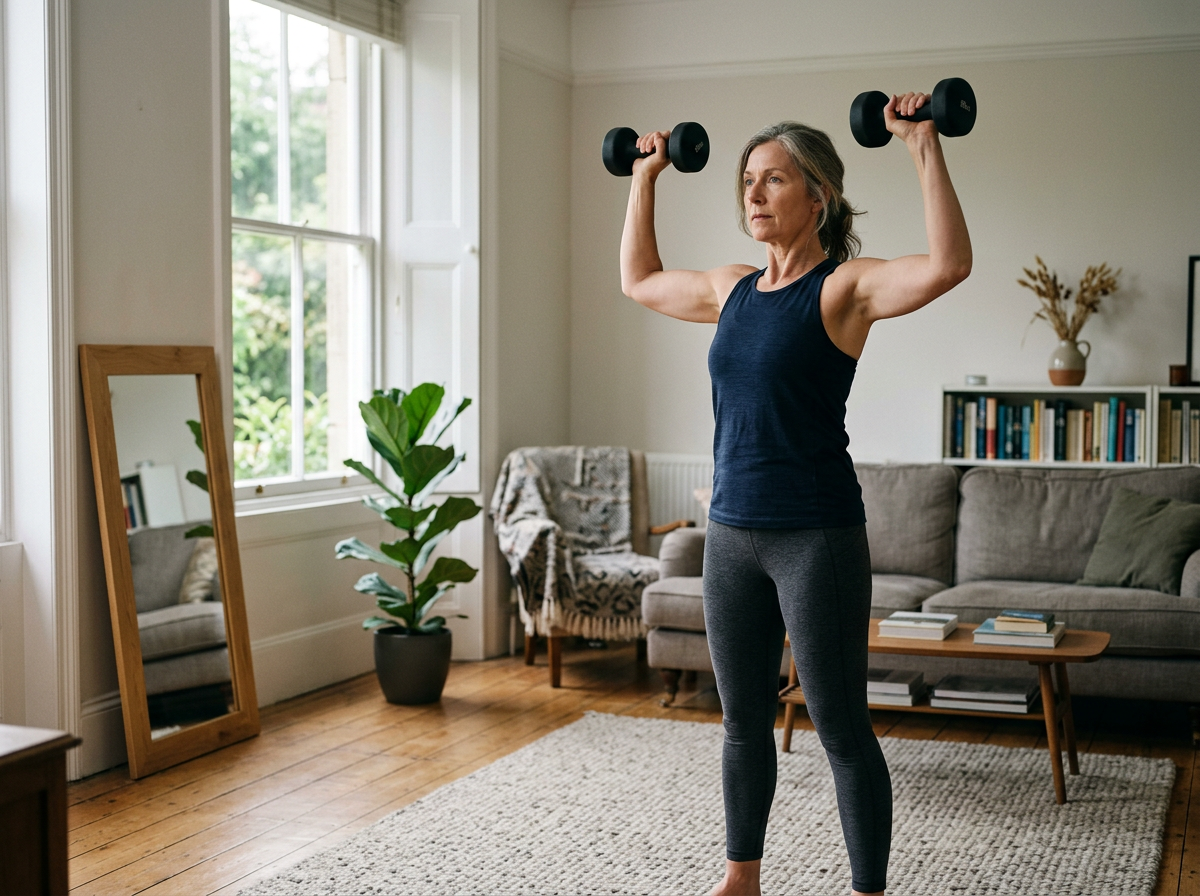
AI generated image of woman performing a dumbbell shoulder press
5. Farmer's carry
Why it's underrated: It might look simple, but carrying weights while walking is one of the most functional exercises you can do. It challenges your grip, core, shoulders and legs while working on posture, balance and stability. Good grip strength matters as we get older as it helps us stay strong and independent when it comes to everyday tasks such as carrying shopping and opening jars.
How to do it: Pick up a heavy dumbbell or kettlebell in each hand. Stand tall with your shoulders relaxed and chest lifted. Brace your core and walk slowly in a straight line, taking controlled steps while resisting the urge to lean from side to side.
Recommended weight: Beginners: 8-12kg in each hand. Intermediate: 12-20kg. Don't be afraid to go heavier: many women can comfortably carry more than they realise.
Sets: Walk for 20 to 40 metres, or 30 to 45 seconds. Repeat three times.
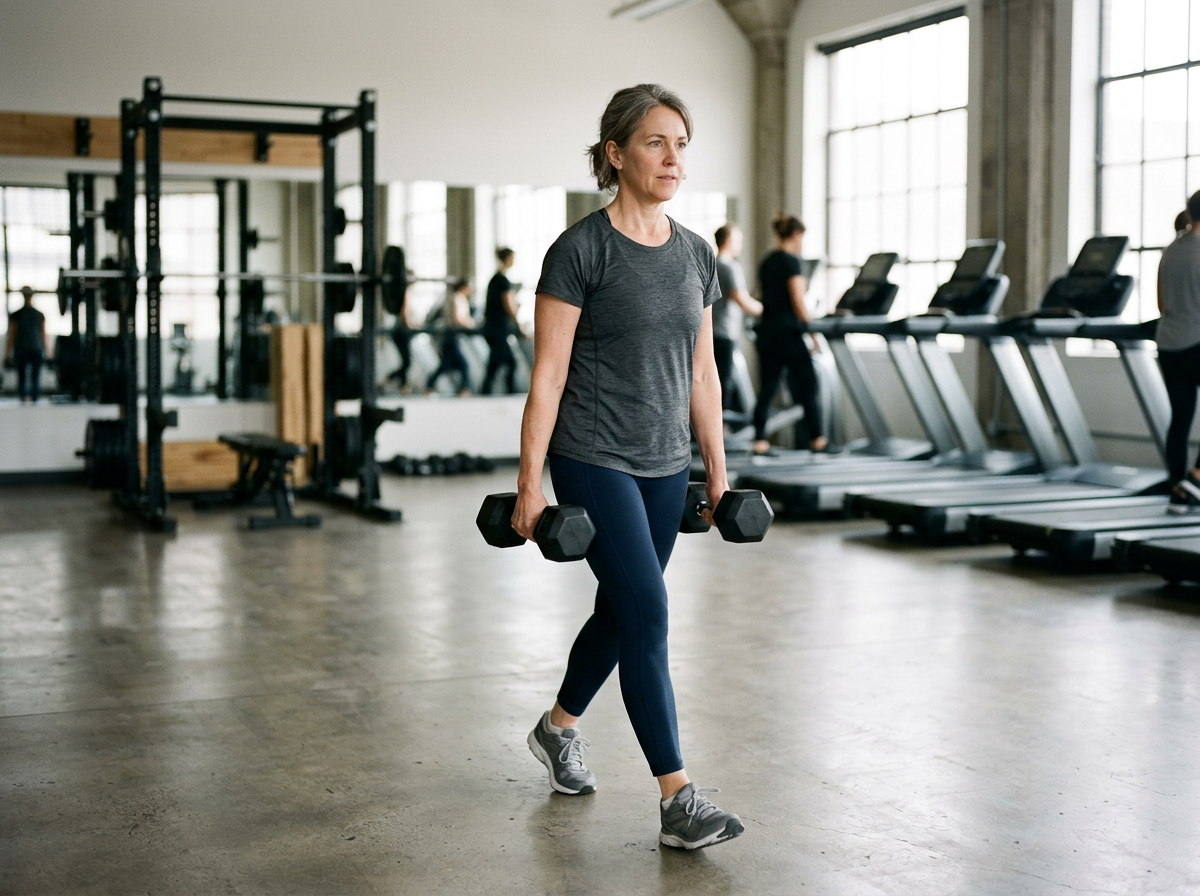
AI generated image of woman performing a farmer’s carry