Train smarter, not harder: how to build fitness without pushing yourself to the limit
If I'm walking like the cowboy John Wayne the day after a workout, then I'm chuffed. Surely, it MUST have been a good session if I'm sore, achy and can barely walk?
But do we sometimes mistake being very sore after a workout for having had a ‘good’ workout?
That post-workout ache actually has a name: delayed onset muscle soreness, or DOMS. It usually develops 12 to 24 hours after more intense exercise, peaks within 24 to 72 hours and gradually settles over the following days.
It's caused by the stress exercise places on your muscles, particularly when you're doing movements your body isn't used to. You might feel tender, stiff or uncomfortable when moving, but you shouldn't be struggling to walk or getting on with everyday life.
DOMS isn't a reliable measure of how effective a workout has been. You can get stronger and fitter without feeling sore afterwards and repeatedly pushing yourself to exhaustion can leave you struggling to recover.
‘There’s a belief that if you can’t walk properly the next day, it must have been a great session,’ says Sammy Margo, a chartered physiotherapist who is part of the Deep Freeze and Deep Heat expert hub. ‘But severe soreness or exhaustion often means you’ve simply done too much, rather than trained effectively. A good workout should leave you feeling energised and challenged, maybe with a little muscle tiredness, but not wiped out or struggling to move. You may need to factor in more recovery time if you’re regularly exhausted, constantly sore, sleeping badly, or your performance is dipping. Sleep also matters for a good workout, as it’s when our bodies recover. Something I always say is that there are no extra fitness points for making yourself miserable.’
What are the biggest mistakes people make when trying to get fitter?
One of the easiest traps to fall into is doing too much too soon. You might suddenly increase your running distance, add extra gym sessions or start a new workout every day because you're keen to see results. But your enthusiasm can be too much for your body's ability to adapt, increasing your risk of injury and leaving you feeling exhausted rather than fitter.
‘Doing too much too soon is the number one mistake I see,’ says Sammy. ‘Other big fitness mistakes are people training hard every day with no rest, skipping the warm-up and cool-down, ignoring niggles, and wearing the wrong shoes for the activity. This is mostly because people want results fast, and so recovery is the first thing they cut. But it’s actually the thing that helps them progress. The people who stay injury-free are generally the ones who build up gradually, mix up their training, include strength work, and give their bodies time to adapt.’
Is it DOMS or an injury?
Muscle soreness V’s struggling to lower yourself onto the toilet. It can be difficult to tell the difference between ordinary post-exercise soreness and something that needs attention so if it doubt Sammy says: ‘Normal muscle soreness tends to be a dull, achy tightness across a whole muscle or group of muscles. It usually appears a day or so after exercise and eases within a couple of days. Injury pain is different. It’s more likely to be sharp, stabbing, to come on suddenly during exercise, or to sit in a joint rather than the muscle.’
Sammy advises stopping if the pain gets worse, and definitely if you start limping. ‘The same goes for swelling, bruising, or pain that persists after a few days. Pain is your body’s way of saying something needs attention, so it’s worth listening to it early.’
So, when is it safe to get moving again?
‘It depends on the niggle,’ she says. ‘For a mild niggle, you can often modify your workout by reducing the intensity or duration, swapping high-impact exercise for something gentler, or giving that area a rest while you work other parts of the body. Getting it checked early can prevent longer setbacks later.’
The key is not to push through pain in the hope that it will disappear. ‘Pain is a signal, and ignoring it often turns a small problem into a bigger one,’ she says. ‘In fact, in a study by Deep Heat and Perspectus Global, 54% of Brits said they try to mask pain, which can make it harder to tell what’s really going on, and can actually make a minor injury spiral into something more serious.’
Why rest days matter
Rest days aren't a sign of laziness or a lack of commitment. They're part of the training process.
When you exercise, particularly during strength training, you create tiny amounts of damage in your muscle fibres. As your body repairs them, the muscles adapt and become stronger over time. Your body needs recovery, adequate nutrition and sleep to support that process. It's not simply a case of tearing muscles and hoping they'll repair overnight, but the principle is straightforward: you need to recover from training to benefit from it.
That doesn't have to mean dossing about on the sofa. Gentle walking, mobility work or an easy swim can help you stay active without putting your body under the same demands as a hard session.
‘Many people also wrongly believe that you only need to warm up if you’re a serious athlete, and that you can’t do strength training as you get older, when in fact it’s the opposite: the older we get, the more we benefit from it.’

Chartered Physiotherapist, Sammy Margo
Sammy's top THREE tips for training smarter, not harder
‘Build up gradually. Your body adapts more slowly than your motivation does, so add a little more time, distance, or weight each week, and ease back if you start to feel pain.’
‘Make rest and strength training part of your plan. Rest days are when your body repairs and actually gets fitter, while strength work for the glutes, core, and legs helps your muscles absorb impact and protect your joints.’
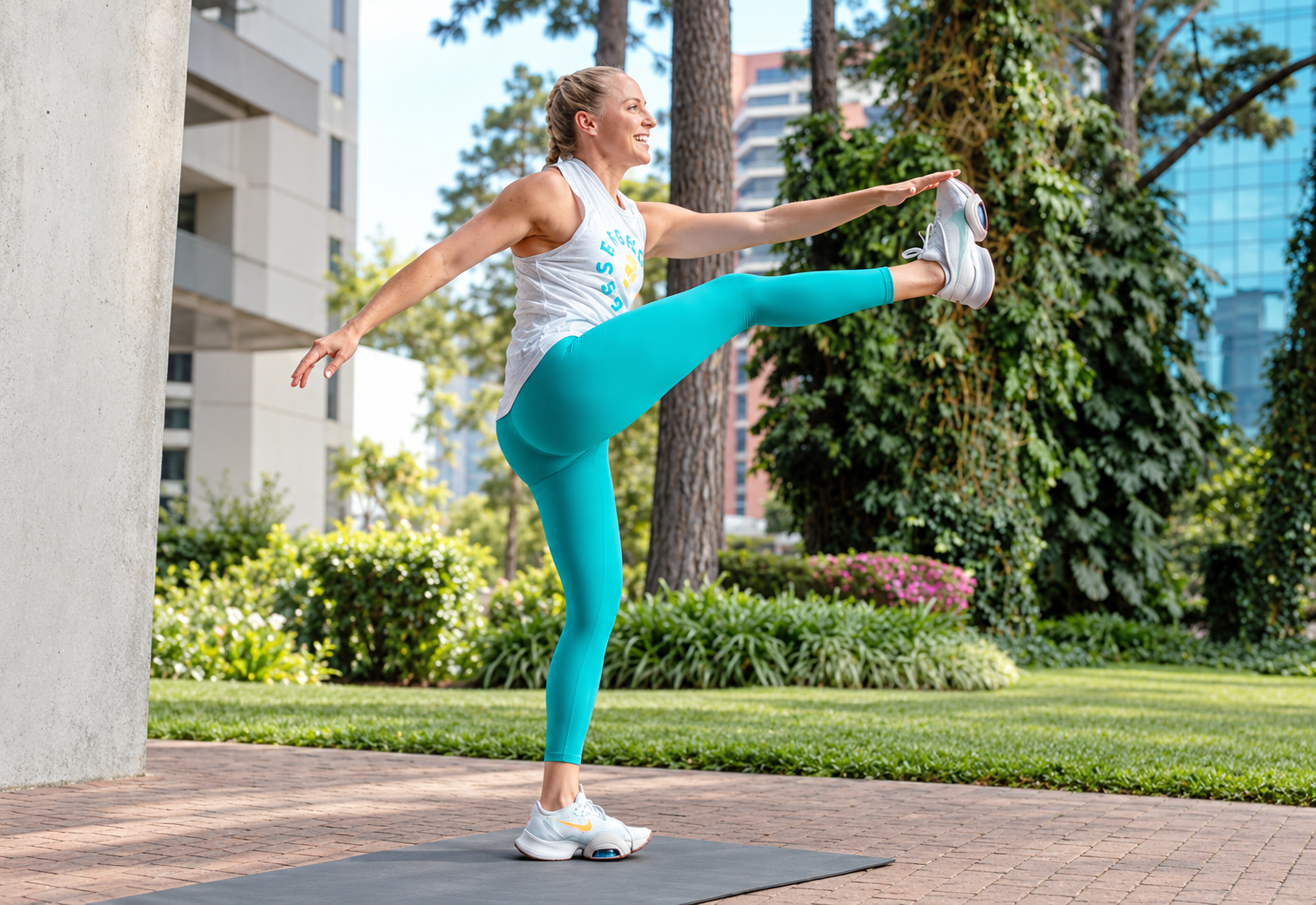
‘Always warm up and cool down. Just a few minutes of dynamic movements, like leg swings and walking lunges, help prepare your body for your workout or exercise.’
How to warm up properly
A warm-up doesn't need to be complicated or take up half your workout. Aim for around 5-10 minutes, gradually increasing your heart rate and preparing your body for the movements you're about to do. Dynamic movements are best, like leg swings and walking lunges, as they take your joints through their range of movement. If you're about to run, start with a brisk walk and build up to an easy jog. Before lifting weights, begin with lighter movements and gradually increase the load.
‘A proper warm-up gradually increases blood flow to the muscles and prepares the body for movement, and yet the Deep Heat study found that only 44% of people warm up every time they exercise,’ states Sammy.
Why recovery becomes more important in midlife
As we get older, changes in muscle, connective tissue and hormonal levels can affect how we feel during and after exercise. During perimenopause and menopause, fluctuating and declining oestrogen can also influence muscle and bone health. That doesn't mean you need to do less. It means being more thoughtful about how you train.
‘As we get older, our bodies tend to take longer to repair, and in midlife, changing hormone levels can affect muscle, bone, tendons, and joints,’ she says. ‘So, you may feel stiffer, take longer to recover, or be more prone to niggles than you used to. Prioritise strength training a couple of times a week and mix harder sessions with lower-impact activity such as walking, Pilates, or swimming. Also, allow extra recovery time between tough workouts.’
Strength training is particularly valuable as we age because it helps maintain muscle strength and supports everyday activities. You don't need to lift heavy weights straight away, either. Resistance bands, bodyweight exercises and manageable weights are all ways to start, building up gradually as your strength improves. Find out why strength training matters more as you get older.
Are you wearing the right trainers?
Your footwear matters, too. The best trainers for a run aren't necessarily the best choice for a gym session. Running shoes are designed to support forward movement and repeated impact, while gym or training shoes often multi-lateral support - moving in different directions.
‘The right exercise shoe can make a huge difference to your comfort and injury risk,’ says Sammy. ‘Everyone’s foot shape, gait, and biomechanics are slightly different, so shoes that suit one person might not suit another. Look for a shoe designed for your activity. Make sure there’s enough room for your toes, a snug heel, and good support. And don’t hang on to trainers for too long, as the cushioning wears down over time.’
Ultimately, training smarter means paying attention to how you feel, allowing time to recover and building up gradually. If your body is telling you it needs a rest day, take it. You won't lose your fitness overnight, and you may come back feeling stronger and ready to go again.