Organic beauty: is it better for your skin?
Walk into a beauty shop and you'll be bombarded with words like natural, organic, clean, plant-based and non-toxic. But what do any of them actually mean? And can you really tell what's better for your skin from the front of the bottle?
Beauty marketing has become really good at making products sound, well, awesome and incredibly wholesome. Green leaves, botanicals and words like ‘pure’ and ‘clean’ alongside a herbal list of ingredients can all give the impression that we're making a better choice when it comes to products for our skin.
But are we? Despite what some beauty marketing would have us believe, ‘chemical-free’ isn't actually a thing and ‘natural’ doesn’t necessarily mean kinder on our skin.
So what should we actually be looking for? We asked Charlotte Vøhtz, organic beauty expert and founder and CEO of Green People Organic, to explain what the terminology really means, what certification can tell us and how to make more informed choices when we're standing in front of the skincare shelf.
So, what does organic actually mean?
Unlike organic food, there isn't a single UK legal definition for ‘organic’ cosmetics.
The COSMOS-standard (Cosmetics Organic and Natural Standard) sets criteria for organic and natural cosmetics covering areas including ingredient sourcing, processing, formulation, manufacturing, labelling and environmental management. Products are certified by authorised independent certification bodies. This gives consumers something more concrete to look for when browsing for products.
The Soil Association confirms that COSMOS certification is used where the terms natural and organic aren't otherwise regulated in beauty, and that it certifies products against the COSMOS standard.
‘This is where it gets confusing for consumers because, unlike organic food, the word “organic” is not regulated in the same way when it comes to cosmetics. For me, genuinely organic beauty is about much more than putting a little organic aloe vera into a formula and calling the product organic. It starts with how plant ingredients are grown, how they are processed and how the finished product is formulated. That is why I have always believed independent certification is so important. A recognised standard, such as Soil Association COSMOS or certification by the Organic Food Federation, gives consumers something tangible to look for rather than simply having to trust the marketing on the front of the bottle.’
In other words, certification doesn't tell you that a product is automatically better. It tells you that the product has met a defined set of criteria.
Natural, organic and clean aren't the same thing
Hands up who has been baffled by the overlap of these words? They are often thrown around together, but they actually mean different things.
‘These words are often used interchangeably, but they do not mean the same thing,’ says Charlotte. ‘Natural generally describes an ingredient derived from a plant, mineral or other natural source, although the degree of processing can vary. Organic relates to the way agricultural ingredients are grown and processed and, where a cosmetic is certified organic, the formulation has to comply with a defined standard. Clean beauty is much harder to define. There is no single, universally accepted definition, so it can mean very different things from one brand to another. That does not make the word meaningless, but I would always encourage people to look beyond a single word on the front of the bottle and ask: What is actually in this product? Who has verified the claims? And is it suitable for my skin?’’
That’s an important question to ask, because a botanical ingredient isn't automatically going to be right for your skin.
Does organic mean better for your skin?
Not necessarily, says Charlotte. While organic ingredients can offer benefits, she stresses that the word itself doesn't automatically mean a skincare product will be better for your skin. It’s the quality of the overall formulation that matters.
‘I do believe there are very good reasons to choose high-quality organic ingredients wherever it makes sense,’ she says. ‘Our skin is a highly effective protective barrier, but it is not completely impermeable. Certain substances applied to the skin can penetrate its outer layers and, depending on their properties and the formulation, some can be absorbed more deeply. The ingredients in our skincare do not begin their life in a bottle. They come from somewhere. How plants are grown affects soil, biodiversity, waterways, farm workers and the wider environment. Choosing certified organic plant ingredients means working within farming systems that restrict synthetic pesticides and fertilisers and place greater emphasis on soil health, biodiversity and responsible use of natural resources.’
Organic beauty is not about saying organic is better. Instead, Charlotte says you need to ask the question: ‘What are we putting on our skin, how was it produced, and what impact did producing it have on the world around us?’ She adds that: ‘A beautifully formulated product should look after skin health, but I believe we should also consider the health of the environment too.’
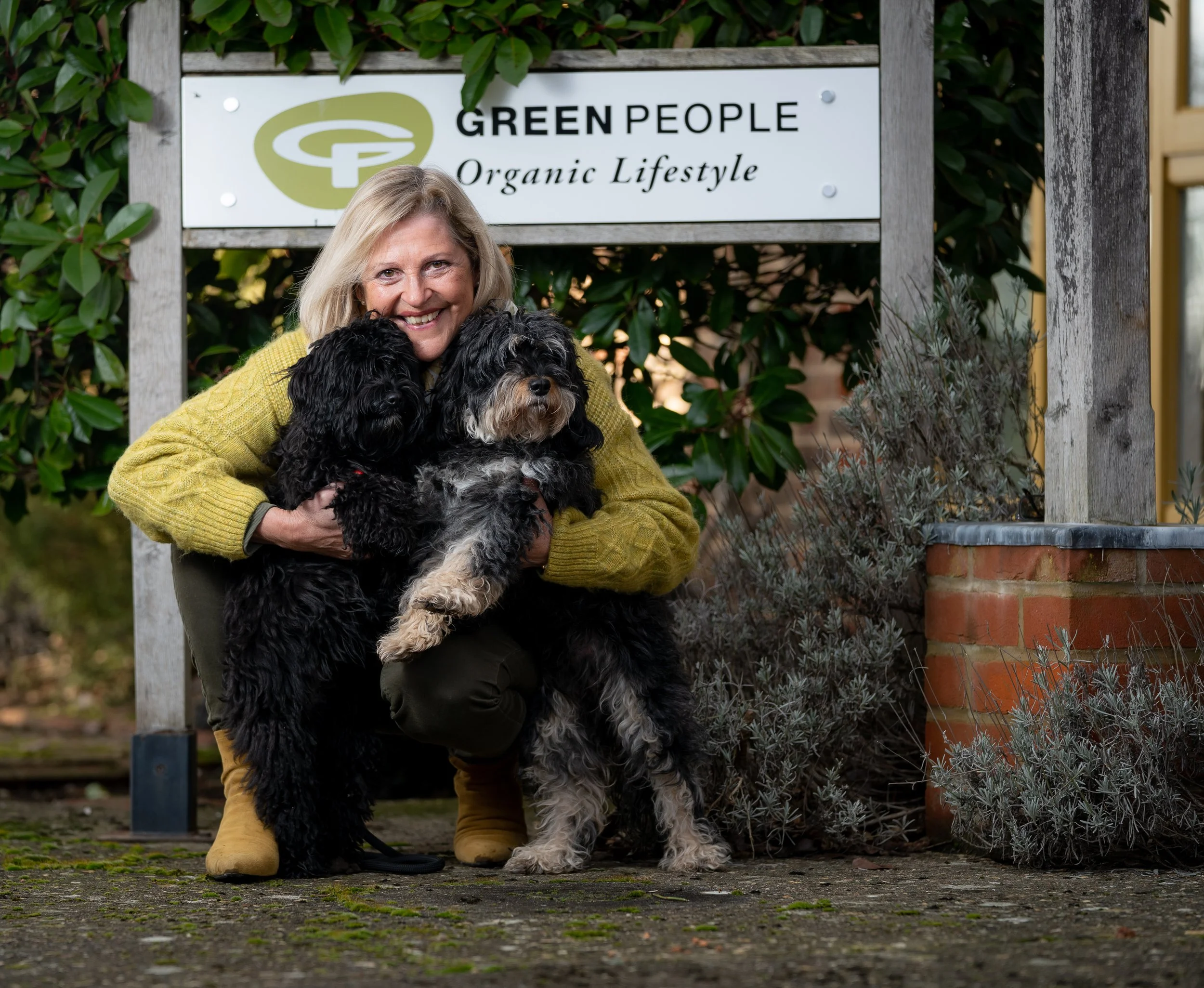
Charlotte Vøhtz, organic beauty expert and founder and CEO of Green People Organic.
Natural does not mean kinder to skin
Essential oils and ethanol are often used in skincare products and can be naturally derived, but that doesn't mean everyone will tolerate them. The point is, natural does not automatically mean non-irritating or suitable for everyone.
‘This is one of the biggest misconceptions in natural beauty. Ethanol can be naturally derived, and essential oils are natural, but both may be unsuitable for some people with very sensitive or reactive skin. Equally, there are synthetic ingredients with excellent safety records that are very useful in cosmetic formulation. I started Green People because my daughter Alexandra had severe eczema and multiple allergies, so sensitive skin has always been my starting point. That experience taught me very early that “natural” and “gentle” are not automatically the same thing.’
In her expert opinion, Charlotte says that the ‘less is more’ approach is often best for those who have sensitive or reactive skin. ‘A carefully formulated, fragrance-free product with ingredients chosen specifically for sensitive skin can be far more important than whether every ingredient sounds beautifully botanical,’ she adds. For anyone whose skin is reactive, that means looking at the whole formulation rather than simply searching for the word organic.
What should you actually look for?
This is where things get refreshingly simple. ‘Turn the bottle around!’ says Charlotte. ‘The front tells you what the brand wants you to know; the back often tells you much more. Look for independent certification and look at the ingredient list and consider what your own skin needs. If fragrance or drying alcohol is a trigger for you, look for products clearly described as fragrance-free and free from ethanol. Look for supporting evidence, such as dermatological testing, rather than relying entirely on descriptive marketing language. And do not be frightened simply because an ingredient has a long scientific name. Cosmetics have to use standardised INCI ingredient names, so even very familiar plant ingredients can sound rather technical on the label.’
Finally, don't assume a bigger price tag means a better product either. ‘Price can reflect expensive active ingredients, high-quality raw materials, organic certification, research, packaging and small-scale manufacturing,’ she says. ‘I would rather see someone spend £25–£30 on a well-formulated moisturiser that suits their skin and that they use consistently than £150 on something fashionable that their skin does not need. Good skincare does not have to be complicated.’
Also, don’t be scared of the word ‘chemical.’ This word encompasses things like water and vitamin C and doesn’t mean something is necessarily harmful. Marketing claims that something is ‘chemical-free’ shouldn’t be taken too seriously.
‘Nothing is chemical-free: not our skin, not an organic plant extract and certainly not a pot of moisturiser. It is also not more accurate to say ‘free from synthetic chemicals’, because whether an ingredient is natural or synthetic does not, by itself, determine its safety.’
The bottom line
Perhaps the most useful takeaway is to stop looking for one magic word on the front of your skincare bottle. Organic beauty can have benefits, especially where ingredients are independently certified and produced according to defined organic standards.
‘I have worked with organic skincare for nearly 30 years and I do not think consumers should be told that organic is good and synthetic is bad. Skin is far more complicated than that.’
So, rather than asking whether something is natural, clean or organic, ask whether it is well formulated, properly substantiated, independently certified and right for your skin.