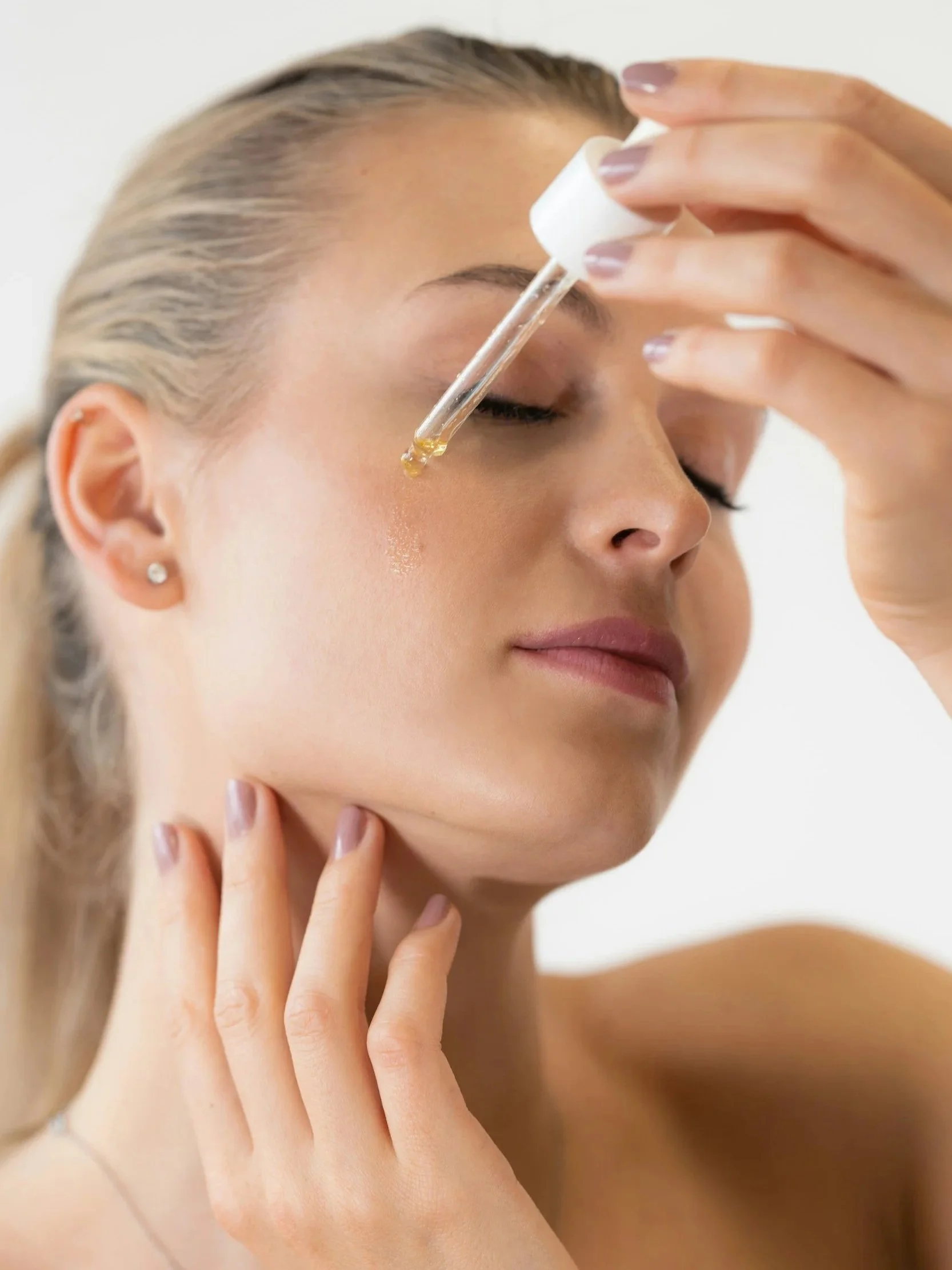
If your bathroom shelf is groaning under the weight of products, you're certainly not alone. I have tonnes of serums, creams and oils all promising smoother, brighter and firmer-looking skin. But with some women following five-step (or even longer) skincare routines, it's worth asking: are we doing too much?
Many of these products contain active ingredients, commonly known as actives. These are ingredients that directly address skin issues such as acne, pigmentation, fine lines, dryness, or dullness. Retinoids, vitamin C and exfoliating acids are well-known examples, while niacinamide can help support the skin barrier and hyaluronic acid helps attract and retain moisture.
You may also have heard of ‘skin cycling’, which involves rotating products containing active ingredients across different days rather than using them every day. The idea is to give your skin time to recover, helping to reduce the risk of irritation while still getting the benefits of the products. But is it really necessary – and does the approach live up to the hype?
What happens when we use too many actives?
Using more products doesn't necessarily mean better results and Dr Adel Quttainah, plastic surgeon and founder of Quttainah Medical Group, explains why it's important to strike a balance.
‘Retinoids and exfoliating acids can make a real difference to the skin, particularly when it comes to fine lines, pigmentation, breakouts and uneven texture, she says. ‘Retinoids help regulate skin cell turnover and stimulate collagen production, while exfoliating acids remove dead skin cells to improve texture and brightness. However, I think people sometimes assume that using more of these ingredients will give them better results, when actually the opposite can happen. The skin has a natural protective barrier, and if you're constantly exfoliating or applying strong retinoids without giving it time to adjust, you can end up with irritation, dryness and inflammation. The aim is to improve the skin over time, not to push it to the point where it becomes uncomfortable.’
The skin barrier helps retain moisture and protect against external irritants. When skin becomes irritated, it can feel dry, tight and sensitive. Caroline Hall, aesthetic nurse and founder of R&R Aesthetics, says combining several products can be a particular problem.
‘You can be using several excellent skincare products and still end up with skin that looks worse simply because you're combining too many active ingredients,’ she says. ‘For example, someone might be using an exfoliating cleanser, an acid toner and a strong retinoid in the same routine. Each product may be effective individually, but together they can cause irritation, dryness and breakouts. In some people, particularly those prone to pigmentation, repeated inflammation can actually make discolouration worse. It's something I think people often overlook because they assume that if a product is clinically proven to work, adding more products will only improve the results. In reality, sometimes simplifying your routine can make far more difference than introducing another expensive serum.’
The lesson? Before buying another serum, consider whether your existing routine is working for your skin. What benefits are you seeing and have you noticed any concerns? Only then can you decide whether to cut back.
Does skin cycling actually work?
Skin cycling usually means alternating nights when you use active ingredients with nights devoted to moisturising and supporting the skin barrier. The aim is to reduce irritation without eliminaing ingredients that can be beneficial.
Dr Quttainah believes the approach can be helpful, although there isn’t a proven skincare formula. ‘Skin cycling has become incredibly popular, and I think the principle behind it makes sense. However, there isn't currently strong clinical evidence showing that following a specific skin cycling routine delivers better results or makes active ingredients more effective. What I like about the approach is that it encourages people to be more mindful of how often they're using strong ingredients, rather than applying everything at once. But it isn't something everyone needs to follow. Some people may need several recovery nights, while others can comfortably use retinoids more frequently without experiencing any problems.’
The signs you're overdoing it
A little dryness or flaking can occur when you first introduce a retinoid, but if your skin feels tight, red or sensitive it may be telling you to reassess your routine.
Caroline explains how to recognise the difference. ‘A little dryness or mild flaking isn't unusual as the skin can take some time to adjust, and these symptoms often improve when you reduce how frequently you're applying the product,’ she says. ‘However, there's a difference between mild dryness and skin that's persistently red, burning or painful. If even your usual moisturiser starts stinging, that's a sign that your skin is becoming irritated rather than simply adjusting. People also assume that any breakout after starting a new product is skin purging, but that isn't always the case. If you're developing spots in areas where you wouldn't normally break out, particularly alongside redness or sensitivity, the product may simply not be agreeing with your skin.’
Why midlife skin may need a different approach
If you're in your 40s or 50s, you might notice that products you've been using for years suddenly feel different. Hormonal changes during perimenopause and menopause can affect the skin so you might need to adjust your routine duirng this transition.
‘During perimenopause and menopause, as oestrogen levels decline, the skin can become drier, thinner and less able to retain moisture,’ explains Orsi Matheisz, skincare director and founder of Orskin Aesthetics. ‘Women sometimes notice that products they've used comfortably for years suddenly start causing irritation. It's also a time when many women begin using stronger anti-ageing ingredients because they're noticing changes in firmness, fine lines and pigmentation. I wouldn't necessarily recommend stopping retinoids or exfoliating acids because they can still be very beneficial, but you may need to adjust how you're using them. That might mean choosing a gentler formulation, reducing the frequency or introducing a richer moisturiser to support the skin barrier. Your skin's needs can change quite significantly during midlife, and your skincare routine should reflect that.’
How to give your skin a reset
If your skin feels tight, flaky or unusually sensitive, it might be time to focus on hydration and steer clear of the stronger actives. Our guide to Autumn Skincare: 7 hydration heroes for dry skin can give you some suggestions for products to replenish moisture.
Orsi recommends keeping things simple for a while too. ‘I would start by stripping the routine right back,’ she says. ‘Put the retinoids, exfoliating acids and scrubs aside and focus on keeping the skin comfortable. Use a gentle cleanser, a moisturiser containing ingredients such as ceramides or glycerin, and a broad-spectrum sunscreen every morning. I'd also avoid hot water, harsh cleansing brushes and anything else that could cause further irritation. Mild irritation may settle within several days, although more significant barrier damage can take longer. Once the redness, tightness and stinging have resolved, you can gradually reintroduce your active ingredients, one at a time. The mistake is going straight back to your previous routine as soon as your skin starts looking better, rather than allowing it enough time to recover properly.’
It's also worth reviewing how you layer your products. Our guide to which order your skincare should go in, explains what goes first and how to organise your morning and evening routines.
Does your skincare routine need to be complicated?
In short, no. Choose ingredients that suit your concerns, rather than following trends or the latest must-buy.
‘More isn't always better,’ adds Orsi. ‘I'd much rather see someone using one or two well-chosen active ingredients consistently than applying six different products every evening. Choose ingredients that actually address your skin concerns, introduce them gradually and pay attention to how your skin responds. There's also a misconception that skincare needs to sting, tingle or cause peeling to be effective, which simply isn't true. Some of the best long-term results come from a relatively simple routine that keeps the skin healthy while still delivering the benefits of active ingredients.’
You don't necessarily need to abandon your favourite retinoid or follow a strict skin-cycling schedule. The aim is to find a routine that works for your skin, while recognising that its needs may change over time.
Sometimes, the smartest skincare move isn't adding another active. It's giving your skin a little less to deal with.