Has wellness become too complicated? What we can learn from going back to basics
We have more wellness information, products, apps, supplements, trackers, treatments and protocols than ever before.
The message is clear: optimise yourself. Sleep better. Eat the rainbow. Track your hormones. Cold plunge. Sauna. Meditate. Take supplements. Strength train. Get your steps. Track your sleep. Fix your gut.
There's a lot to be said for taking an interest in our health. But when every scroll brings another supplement, another habit to include, another metric to log, it's easy to feel we're somehow getting it wrong.
Perhaps we've lost sight of the basics? That's certainly the view of Katie Brindle, a Chinese medicine practitioner, bestselling author and founder of The Hayo’u Method. Katie has spent more than 20 years working in Chinese medicine and her approach centres on yang sheng; a Chinese philosophy focused on nourishing life through everyday habits and self-care.
‘I think wellness has become far too complicated,’ she says. ‘We have more information available to us than ever before, yet most of us feel completely overwhelmed by it. Looking after yourself has almost become another full-time job. I’ve worked as a Chinese Medicine Practitioner for two decades and one of the greatest lessons it has taught me is that more isn't always better.’
She’s not wrong. Some days I feel totally overwhelmed by the sheer volume of health stuff I need to remember and others incredibly guilty for not having my fitness s*** together. When wellness becomes another thing on the to-do list, something somewhere has gone seriously wrong.
It's not hard to see how we've got here. We're encouraged to monitor every aspect of our lives. Some of these tools can be useful, but there's a difference between understanding our health and feeling we need to manage every last detail of it.
Katie believes our focus on adding more has distracted us from the habits that underpin everyday wellbeing. ‘We’ve become so focused on what we can add that we’ve lost sight of the simple things our bodies need every day. Chinese Medicine has always understood that good health depends on circulation. Your body is designed to move and good circulation underpins so many of its essential processes. Yet modern life encourages us to sit for hours, live under constant stress and become increasingly sedentary.’
She thinks two things in particular have become unnecessarily complicated: supplements and tracking devices.
‘These are my two biggest concerns,’ she says. ‘It feels as though there’s a new supplement launching every day, promising to fix something. But how do you know what your body actually needs? I’m not against supplements, but I think we’ve become far too quick to add things without first understanding why we need them.’
Supplements definitely have a place when there's a nutritional deficiency or a need, but with the market saturated and trend led, how do you know what’s right for you? And then there are the devices that promise to help us understand ourselves better, from sleep trackers to smartwatches.
‘We already live in a world where so many of us are constantly stressed and operating in fight or flight mode,’ adds Katie. ‘Do we really need another device telling us we haven’t slept well enough, walked enough steps or eaten the right things? For some people these tools are genuinely helpful, but for others they create unnecessary anxiety.’
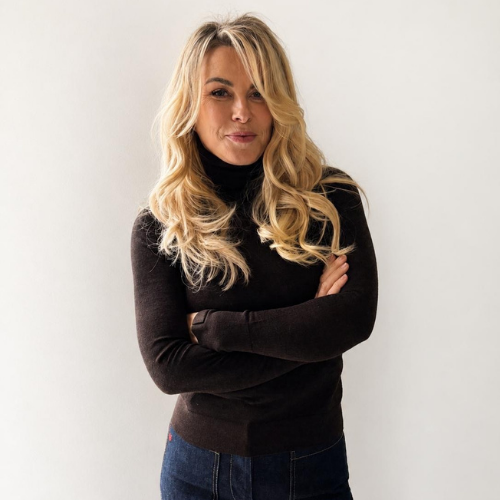
Chinese Medicine Practitioner, Katie Brindle
So what exactly does Katie mean when she says back to basics?
‘For me, it means coming back to our bodies and focusing on the simple, free things we can do every day to support our health,’ she says. ‘The first thing I tell anyone to focus on is their breath. We breathe around 20,000 times a day, completely free of charge, yet how often do we actually think about how we're breathing? Slow, deep breathing can help activate our parasympathetic nervous system and it’s so simple.’
The parasympathetic nervous system helps your body relax after periods of stress. Often called the ‘rest and digest’ system, it supports everyday functions such as digestion and recovery. Slow, controlled breathing can help your body settle into this calmer state.
There's some evidence behind the benefits of breathwork, too. A 2023 study published in Scientific Reports reported that breathwork was associated with lower self-reported stress. In other words, breathing exercises aren't a cure-all, but they may be a useful way to help manage stress.
Try the four box breathing technique
This structured breathing exercise, also called square breathing, involves inhaling for four seconds, holding for four seconds, exhaling for four seconds and finally holding for a final four seconds. It’s designed to regulate your breath, calm the mind, and activate the parasympathetic nervous system reducing stress and improving focus.
Movement is another everyday habit that can get lost in the noise around exercise trends. You don't need a complicated training plan or a particular workout to get started. Walking, stretching and finding opportunities to move throughout the day all count.
The UK's Chief Medical Officers' physical activity guidelines backs up this message - any activity is better than none, with health benefits even at lower levels of movement.
Why women need to stop putting themselves last
‘I think women are particularly guilty of putting themselves at the bottom of the list when it comes to self-care,’ say Katie. ‘We’re so busy looking after everyone else that we’ve become experts at ignoring our own needs. This is why I place enormous importance on scheduling your self-care. Look at when you're eating, sleeping and resting. We’ve become so focused on tracking, measuring and improving every aspect of our health that we’ve forgotten how to listen to our own bodies. Your body thrives on regularity, and sometimes the simplest changes to your daily routine can make the biggest difference.’
This might mean taking a proper lunch break, going for a walk rather than sitting at your desk all day, or giving yourself permission to go to bed instead of scrolling for another 40 minutes. The trick is to find habits that fit into your actual life.
Small rituals
Katie's approach draws on the Chinese medicine philosophy of yang sheng, which centres on nourishing life through everyday practices. The idea is to build habits that support wellbeing over time, rather than waiting until something feels wrong before paying attention to ourselves.
‘In Chinese Medicine, looking after yourself is about small, consistent habits that work with your body, not against it,’ she explains. ‘Some of the most powerful things we can do for our health are also the simplest.’
If you're feeling overwhelmed by the sheer volume of advice, Katie suggests starting with three foundations rather than trying to change everything at once.
‘Breathe deeply to help calm your nervous system and bring your body out of fight or flight mode. Move every day to encourage healthy circulation, whether that’s walking, stretching or simply tapping your body. Finally, in Chinese Medicine, we believe the body thrives on regularity, so scheduling eating, sleeping and resting at consistent times can really help.’
None of this means abandoning medical advice, ditching treatments you need or deciding that every health problem can be fixed with a few deep breaths. The basics are a foundation, not a substitute for appropriate healthcare.
Wellness should help us feel better equipped to live our lives, not leave us feeling like we're failing at them. So perhaps it's worth asking ourselves a simple question before buying the next supplement, downloading another app or buying some tech: have we got the everyday stuff covered first?