Want stronger glutes? The three muscles you need to know about
Let's talk bottoms.
When I see Instagram fitness models with bottoms so pert and firm you could balance a wine glass on them, I often wonder how much time and effort it takes to get a Beyoncé-worthy booty. Let me tell you, it’s a LOT.
But whether your goal is to build a stronger, more pert booty or make climbing the stairs feel less like hard work, your glutes deserve some attention.
Your glutes are among the body's largest and most powerful muscle groups, helping us walk, climb stairs, run and get up from a chair. Yet, when it comes to training them, many of us stick to the same old exercises without really knowing which muscles we're targeting.
Here's something worth knowing: your glutes aren't just one muscle. They're a team of three: the gluteus maximus, gluteus medius and gluteus minimus. They are worked in different ways and understanding what they do can help you put together a more effective workout and lift and hone your derrière.
So let’s meet your glute muscles:
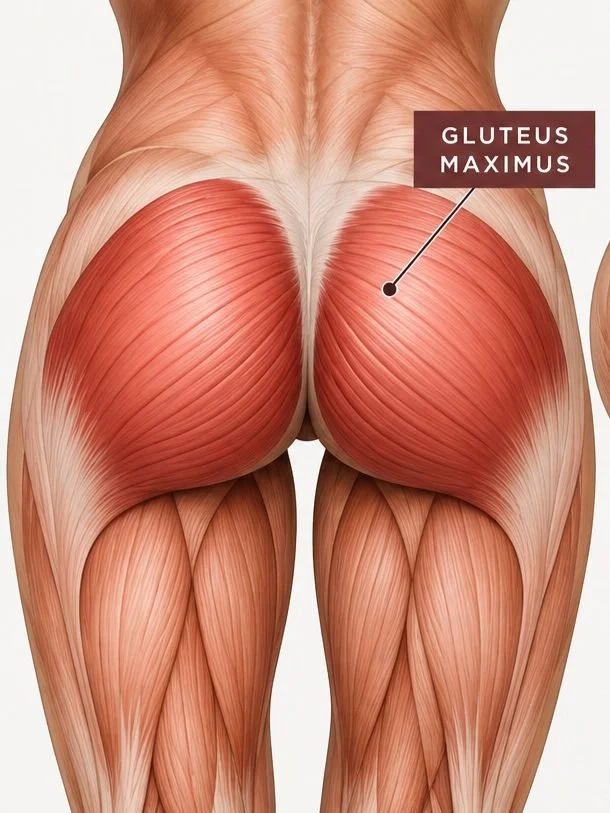
The gluteus maximus: the powerhouse
The largest of the three, the gluteus maximus gives your bottom most of its shape. Its main job is hip extension, which means moving your thigh backwards or bringing your torso upright from a bent-over position. You use it for walking, running, jumping, climbing stairs, getting up from a chair and it helps with picking something up from the floor. If you want to build a stronger, more powerful bottom, this is the muscle you'll want to train with resistance exercise and progressive overload (gradually increasing the demand on the muscle as you get stronger).
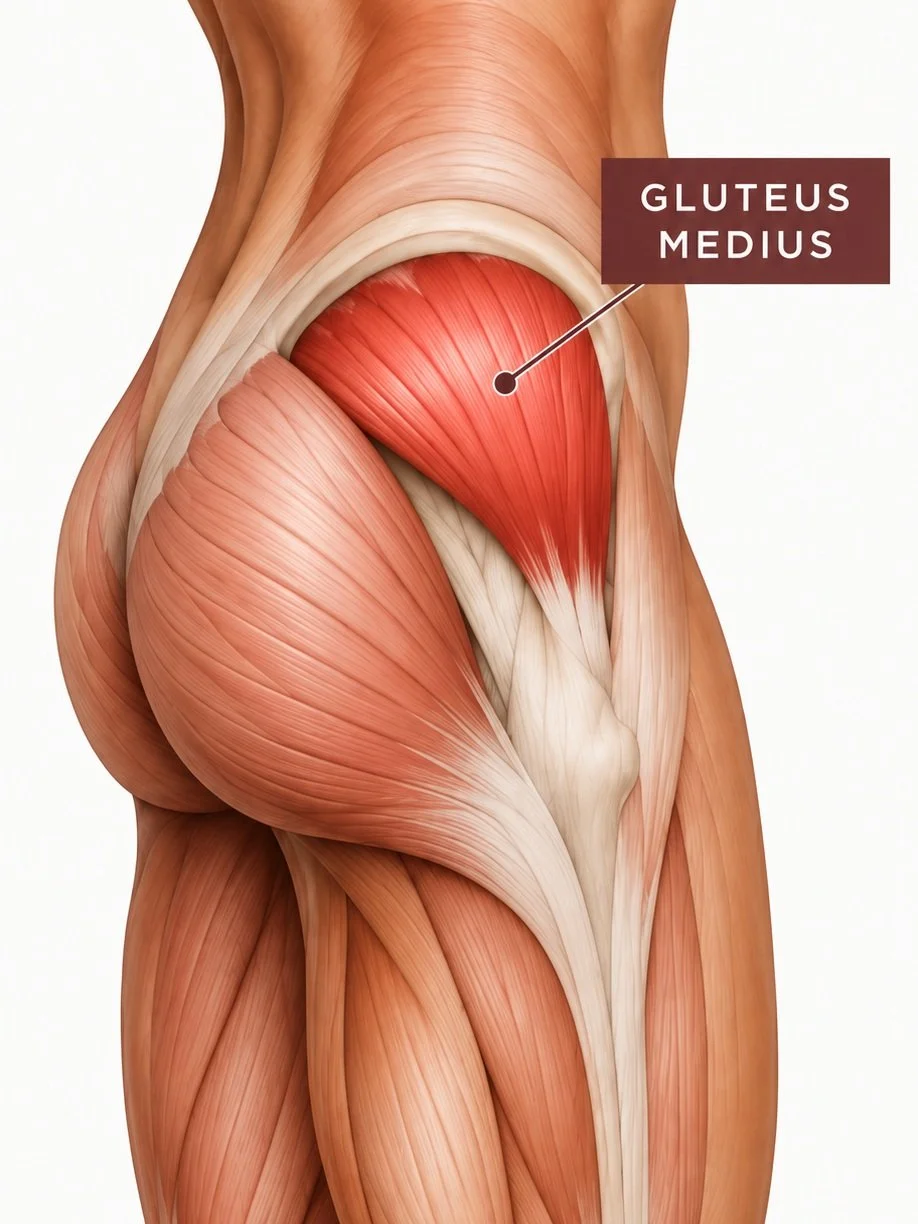
The gluteus medius: your stability muscle
The gluteus medius sits on the outside of your pelvis, partly beneath the gluteus maximus. It helps move your leg out to the side and keeps your pelvis stable when you're standing on one leg. When you’re walking, every time you lift one foot off the ground, the muscles around your hip help stop your pelvis from dropping too much to the opposite side. It's particularly important to keep this strong as we get older, so if your goal is stability, balance and control, it’s worth strengthening the medius.
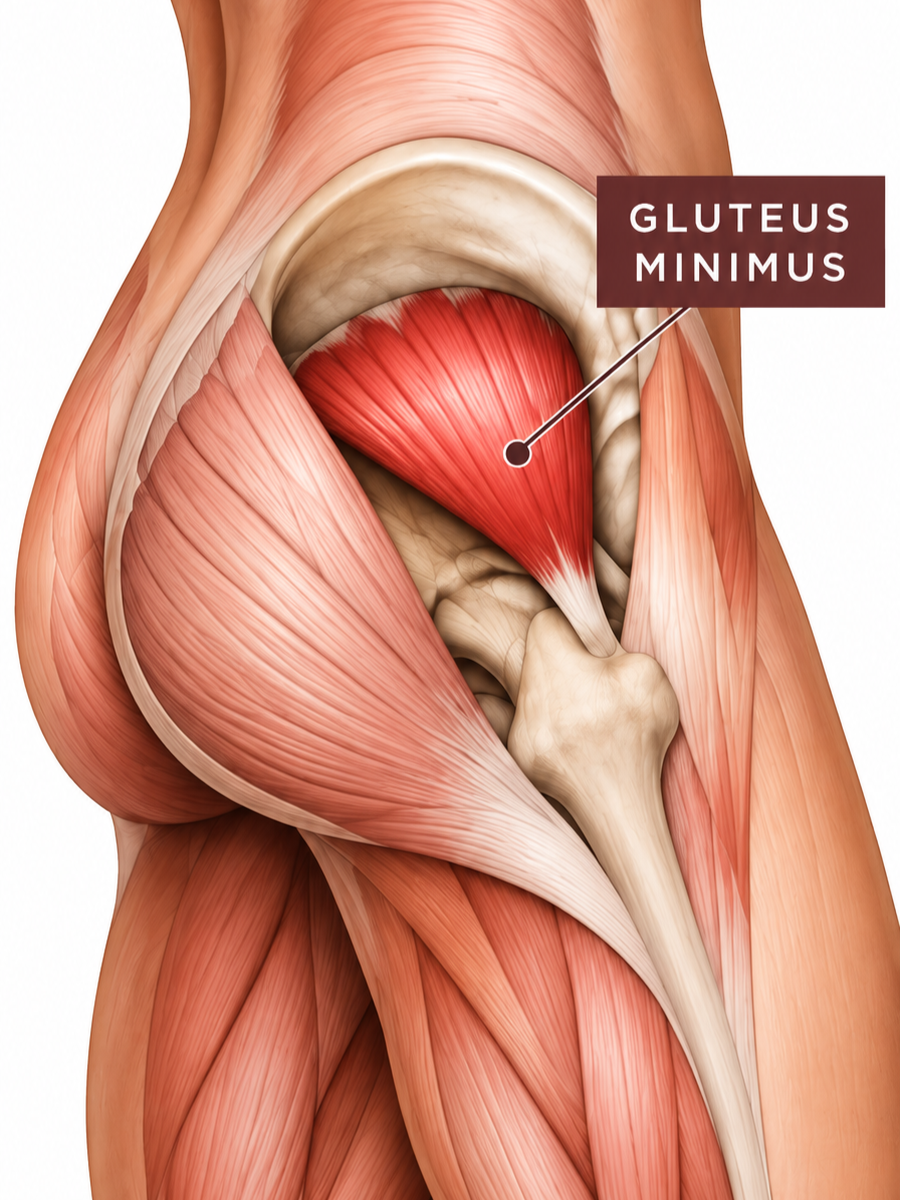
The gluteus minimus: small but mighty
The smallest of the three, the gluteus minimus lies underneath the gluteus medius. It also helps move your leg out to the side and contributes to hip stability and rotation. You can't completely isolate it with one magical exercise, but there are lots of movements that train the gluteus medius while also working the minimus. Exercises such as lying on your side while performing leg raises and resistance-band hip abductions (moving the leg sideways away from the body) work the muscles on the outside of your hip, including the gluteus minimus.
The best exercises for stronger glutes
To build stronger glutes, you need a combination of exercises that work all three muscles in different ways.
The key is resistance training and progressive overload. This means challenging your muscles with exercises such as squats, hip thrusts and Romanian deadlifts, using weights, resistance bands or your own bodyweight.
Gradually increasing the weight, repetitions or difficulty as you get stronger helps your muscles adapt. This is known as progressive overload, and it's an important part of building strength and muscle.
The good news? You don't need dozens of different moves to see results. Here are the ones worth getting to grips with.
For your gluteus maximus
Hip thrusts: These usually involve extending your hips against resistance with your upper back supported on a bench and a weight resting across your hips. You can also start with bodyweight glute bridges if you're new to training.
Romanian deadlifts: A hip-hinge exercise, Romanian deadlifts train the gluteus maximus alongside the hamstrings. They're useful for building strength through the back of your body and strengthening the muscles involved in bending and lifting.
Squats: Working several muscles, including your quadriceps and gluteus maximus, a squat mimics a movement we constantly do in everyday life: sitting down and standing up. You can start with bodyweight squats or sit-to-stands from a chair, then progress to holding dumbbells as you become stronger.
Bulgarian split squats: Working one leg at a time, these are excellent for training the legs and glutes individually. They also require balance and control. Start with bodyweight and use a wall or sturdy support for balance, if needed.
For your gluteus medius and minimus
Side-lying leg raises: To work the hip abductors, including the gluteus medius and minimus, lie on your side with your legs straight and lift your top leg towards the ceiling without rolling your pelvis backwards. They don't require any equipment and the key is control.
Lateral band walks: You've probably seen people walking sideways with a resistance band around their thighs or ankles. Lateral band walks challenge the hip abductors, including the gluteus medius and minimus, while you work to keep your hips and knees controlled. You should feel the muscles around the sides of your hips working.
If you're new to strength training, start with a few of these exercises. Use light resistance or just your body weight and attempt a manageable number of repetitions. As the exercises become easier, gradually increase the resistance or repetitions.
Why strong glutes matter
Building your glutes isn't just about how your bottom looks in your jeans. These muscles play an important role in everyday movements. Maintaining their strength can help support mobility and physical function as we age.
Remember, if building muscle is your goal, don't forget the basics: eat enough food and protein to support your training and make sure you take time for recovery as this is when the muscles repair and adapt.