Are you eating enough protein? The midlife guide to getting what you need
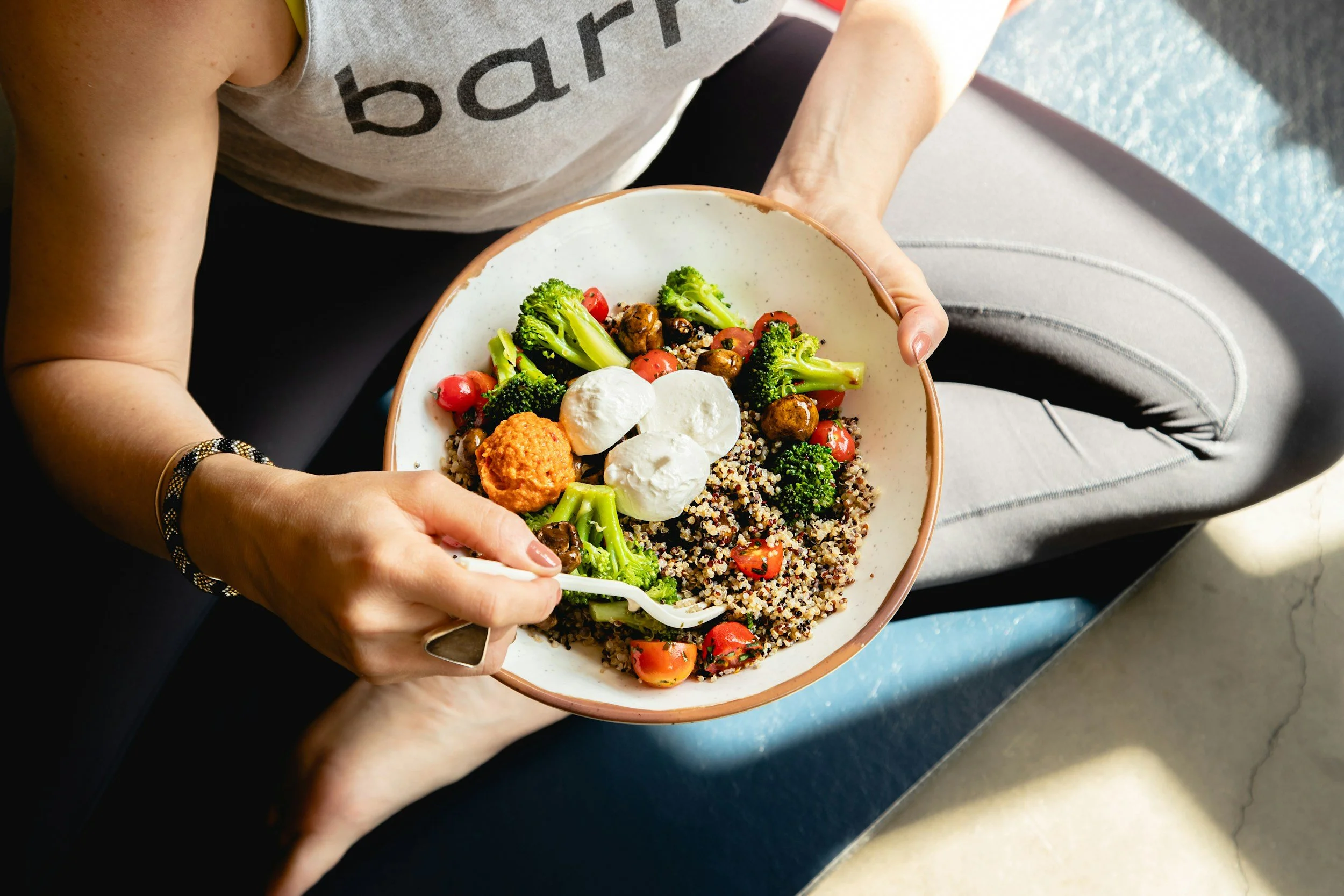
I don't think I've ever thought about protein as much as I do now.
Not in a bodybuilding kind of way, but in a ‘what I eat now matters for my future self’ kind of way.
Because protein is everywhere right now. Protein yoghurts, bars, powders, cereals, crisps, even chocolate. You name it, someone's put a ‘high protein’ label on it.
And if you're a woman in midlife, you've probably noticed that the conversation has shifted, too.
There’s a lot of talk about eating more protein to protect our muscles and get stronger.
I'm certainly more conscious of it than I used to be. Breakfast is usually Greek yoghurt and blueberries because I don't have time to cook. Thankfully, eggs are always on the menu as the twins love them, and I'm trying to be savvier about the meat we eat at dinner.
But how much do we actually need? And do we really need to start measuring every gram?
Protein isn't just about building muscle or recovering from a workout. Our bodies need it to maintain and repair tissues, including muscle, and that becomes particularly important as we get older.
‘Muscles are metabolically active tissue that supports strength, mobility and balance as we age,’ explains registered dietitian Sasha Watkins. ‘From around our 30s and 40s, we gradually start to lose muscle mass, strength and function. By midlife, protein becomes increasingly important because maintaining muscle becomes more challenging with age. Staying active, particularly with strength training, can help slow this down but as we get older our muscles can also become less responsive to the protein we eat, which is something called “anabolic resistance.”’
In practical terms, Sasha says we need to eat a little more protein and give our muscles a reason to use it through activities such as strength training.
Sounds easy enough.
So, how much protein do you actually need?
This is where things get a bit confusing because there isn't one magic number that applies to every woman.
The current UK Reference Nutrient Intake for healthy adults is 0.75g of protein per kilogram of body weight per day. For a 60kg woman, that works out at around 45g a day, while a 70kg woman would need approximately 53g. For comparison, a 100g portion of cooked chicken breast contains around 30g of protein.
However, this is a reference value rather than a personalised target, and your needs can vary depending on your age, activity levels and health. ‘It's important to distinguish between a population reference value and an amount that might be useful for an individual woman who is ageing, perimenopausal or postmenopausal,’ says Sasha, who is also Head of Health at recipe box delivery service Mindful Chef. ‘And, as we get older, the amount of protein that may be useful for maintaining muscle is an area of ongoing research. For me, the key message is not to become obsessed with hitting a single number every day but to look at your weekly intake and overall diet holistically. It's important to make sure that protein, via different sources, is deliberately included in meals rather than being something we happen to get a little of here and there.’
The current protein conversation can make it sound as though every woman is desperately short of protein and needs to supplement with all sorts of extras, but that's not necessarily the case.
‘National diet surveys in the UK consistently show that, on average, adults already eat more than the recommended minimum. Where I do think the conversation is useful is in encouraging women to become more intentional about protein as they get older. Someone might have toast and jam for breakfast, a small salad for lunch and then have most of their protein at dinner. Their total intake may not look dramatically low, but spreading it more evenly across the day is an easy win, particularly as we get older.’
So, what's the simplest change you can make?
‘The easiest place to start is breakfast,’ says Sasha. ‘For many people, breakfast is the meal where protein is easiest to overlook. If you're currently having toast, cereal, or fruit on its own, simply add a protein-rich food like Greek yoghurt, eggs, cottage cheese or some whole milk. You don't need to completely redesign your diet.’
It's an approach you can carry through the rest of the day, too. ‘Rather than worrying about hitting a precise number, simply look at each meal and ask yourself: “Where is my protein?” That one habit can change the distribution of protein across the day without requiring supplements, calorie counting or a completely different way of eating.’
What does a protein-rich day actually look like?
Eggs, Greek yoghurt, milk, fish, chicken, lean meat, tofu, tempeh, edamame, beans, lentils, chickpeas, nuts and seeds can all contribute.
‘A protein-rich diet doesn't have to look like bodybuilding food! For breakfast, you could have Greek yoghurt with oats, berries, nuts and seeds, or eggs on wholegrain toast. For lunch, this might be a chicken and grain salad, smoked mackerel and avocado on rye bread, a hummus and falafel wrap or a lentil and vegetable soup. For dinner, I’d opt for something like salmon with potatoes and lots of vegetables, a chicken stir-fry or a steak salad.’

Registered dietitian, Sasha Watkins.
Remember, if you're eating more protein but doing nothing to challenge your muscles, you're missing part of the picture.
Research in postmenopausal women shows that strength training can improve muscle strength and physical fitness. That could mean lifting weights, using resistance bands or adding bodyweight exercises to your routine. ‘Eating protein and giving your muscles a reason to use it is a much more meaningful long-term strategy than simply buying the product with the biggest “high protein” label’ she says. ‘Resistance training gives the muscle a stimulus to adapt and become stronger, while protein supplies the amino acids needed for repair and remodelling. The two complement each other very well.
If you eat mainly plant-based, the same principle applies
You can get enough protein from a plant-based diet, but it's worth paying attention to how much you're eating and including a variety of sources throughout the day. ‘Plant proteins can, on average, be less digestible and contain lower amounts of some essential amino acids than many animal proteins,’ says Sasha. ‘That doesn't mean they're inferior foods, it simply means you may need to be more conscious about the quantity and variety of protein you're eating. Good options include tofu, tempeh, edamame, soya yoghurt and soya milk, as well as lentils, chickpeas, beans, peas, nuts and seeds.’
Can you have too much protein?
‘Our bodies don't have a storage depot for excess protein in the way they can store carbohydrates such as glycogen or fat,’ adds Sasha. ‘Protein is broken down into amino acids. The amino acids can be used to build and repair tissues, make other compounds the body needs, or, when they're in excess of requirements, be oxidised for energy. The nitrogen component is converted largely into urea and excreted in urine.’
What's the takeaway?
Protein matters in midlife, but you don't need to obsess over it. You don't need a protein shake, a calculator or chicken with everything. Focus on a varied diet, include good sources of protein in your meals and keep your muscles working through regular strength training.